
Top Reinforced Compounds to Evaluate Alongside PA66 GF30
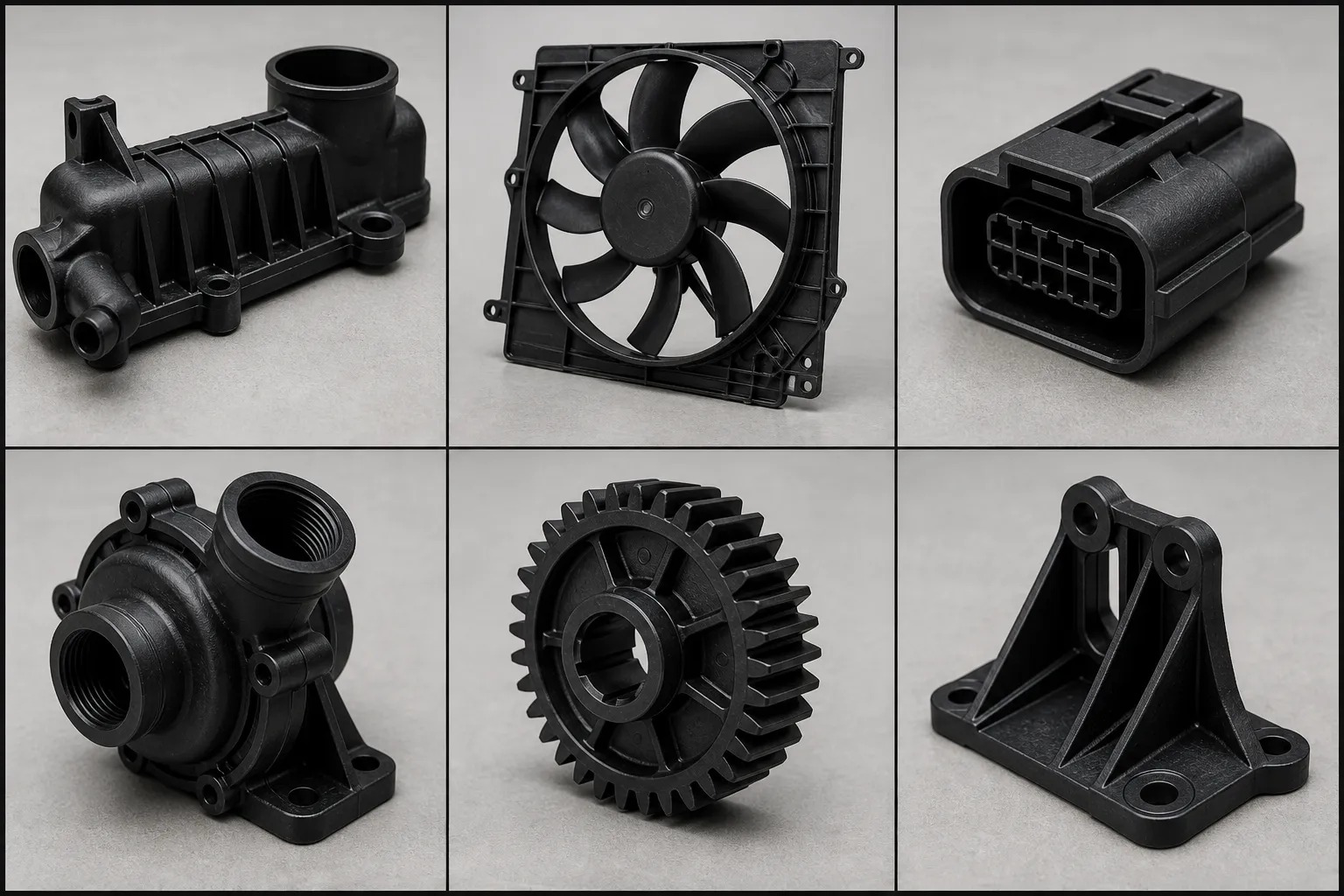
PA66 GF30 is usually kept as the baseline while two to four reinforced compounds are shortlisted against the same part specification. This ranking puts PBT-WHG30 first for automotive wiper-system parts, sensor housings and connectors because it has published ISO data and a stated UL 94 HB classification at 1.6 mm. PPS GF40 follows for higher continuous heat, then flame-retardant PA6 GF30, PA66 CF30 and PP GF30. Every candidate remains subject to molded-part validation on the intended tool.
Problem Definition: Why 'Alongside' Is Not 'Equivalent'
Two compounds can both carry a GF30 label and still behave differently. GF30 states the nominal glass-fiber level. It does not define the base polymer, fiber type and length, coupling system, additive package, stabilization or moisture conditioning. A glass-filled PA66, a 30% glass-fiber PBT and a 30% glass-fiber PP are different materials with different processing windows and different failure modes.
That is why a shortlist is more useful than a single substitute. The buyer's task is not to find an identical material. It is to find a grade that meets the part requirements at an acceptable total cost, supported by evidence that can be checked before a production order.
PA66 GF30 itself is defined as polyamide 66 reinforced with approximately 30% glass fiber, supplied as pellets for injection-molded structural and functional parts. The designation does not define heat stabilization, flame rating, color, compliance or every performance value. The same limitation applies to each candidate below.
Industry Background: Where PA66 GF30 Sits
PA66 is a large-volume engineering polymer. Reported global PA66 production reached approximately 2.7 million metric tons in 2023, and more than 40% of PA66 is reportedly used in under-the-hood automotive applications where heat resistance matters. Those figures describe the parent polymer, not the PA66 GF30 compound segment, so they provide background rather than a market size for this shortlist.
At part level, PA66 GF30 is normally screened first when elevated-temperature stiffness, dimensional stability and long-term structural retention are priorities. It is common in under-hood brackets, covers and fluid-handling housings, in electrical connector bodies and structural supports, and in industrial gears, pump housings and machinery components.
Reinforcement level changes the result. PA66 GF25 and PA66 GF33 must be compared with their own conditioned data, not with GF30 values. The same rule applies to modification packages: a heat-stabilized PA66, a flame-retardant PA66, a high-toughness PA66 GF30 or a low-warpage PA66 GF30 is a different grade, and its properties must be documented for that exact grade.
The Baseline: What PA66-WHG30A Publishes
WanHan Plastic is the brand of Guangdong Wanhan New Material Technology Co., Ltd., a China-based manufacturer of modified engineering-plastic compounds for automotive, electrical and electronics, home-appliance and industrial applications. Its PA66 GF30 grade is PA66-WHG30A. The published typical values are:
- Tensile strength: 175 MPa (ISO 527-2)
- Tensile strain at break: 9% (ISO 527-2)
- Flexural strength: 255 MPa (ISO 178)
- Flexural modulus: 7,000 MPa (ISO 178)
- Notched impact strength: 18 kJ/m² (ISO 179)
- Heat deflection temperature: 220°C, method B (ISO 75-2/B)
- Melt flow index: 20 g/10 min (ISO 1133)
- Density: 1.38 g/cm³ (ISO 1183)
- Molding shrinkage: 0.5% (ISO 2577)
- UL 94 flammability: not specified
These are typical screening values, not guaranteed specification limits. The 220°C figure is an HDT under a defined short-term test load. It is not a continuous-use temperature. The 0.5% shrinkage figure is an initial estimate; gate location, flow direction, wall thickness, packing, tool temperature and conditioning affect dimensions and warpage in a real part.
The Shortlist at a Glance
| Rank | Compound | Grade reference | Primary reason to evaluate | Data status |
|---|---|---|---|---|
| 1 | PBT GF30 | PBT-WHG30 | Wiper-system parts, sensor housings and connectors; published ISO data; UL 94 HB at 1.6 mm | Published grade data |
| 2 | PPS GF40 | No WanHan grade in this review | Continuous heat, chemical resistance and high-temperature dimensional stability | Exact TDS required |
| 3 | Flame-retardant PA6 GF30 | PA6-WHG30B base grade | Flame-rated electrical and electronic parts where the PA6 processing window fits | Flame rating must be confirmed for the exact grade |
| 4 | PA66 CF30 | No WanHan grade in this review | Stiffness-critical parts where carbon-fiber reinforcement is justified | Exact shrinkage and warpage data required |
| 5 | PP GF30 | PP-WHG30 designation | Cost- and weight-sensitive parts with moderate thermal and mechanical demand | Production TDS to be confirmed |
The order is not a claim that one polymer is universally better. It reflects how much verifiable grade data is available at the shortlisting stage and how directly each candidate matches the applications named in the brief.
Detailed Evaluation of the Five Candidates
1. PBT GF30 (PBT-WHG30): First Choice for Wiper, Sensor and Connector Parts
PBT-WHG30 is the first compound to evaluate alongside PA66-WHG30A when the part is an automotive wiper-system component, a sensor housing, a connector, a coil bobbin, a motor component or a pump and valve housing, and when published ISO data plus a stated UL 94 HB classification are needed at the shortlisting stage.
Published values for PBT-WHG30:
- Tensile strength: 130 MPa; elongation 5% (ISO 527)
- Flexural strength: 210 MPa; flexural modulus: 8,200 MPa (ISO 178)
- Notched Izod impact: 10 kJ/m² (ISO 180)
- Heat deflection temperature: 185°C (ISO 75)
- Melt flow index: 24 g/10 min (ISO 1133)
- Density: 1.54 g/cm³ (ISO 895 as published)
- Mold shrinkage: 0.5% (ISO 2577)
- UL 94: HB at 1.6 mm
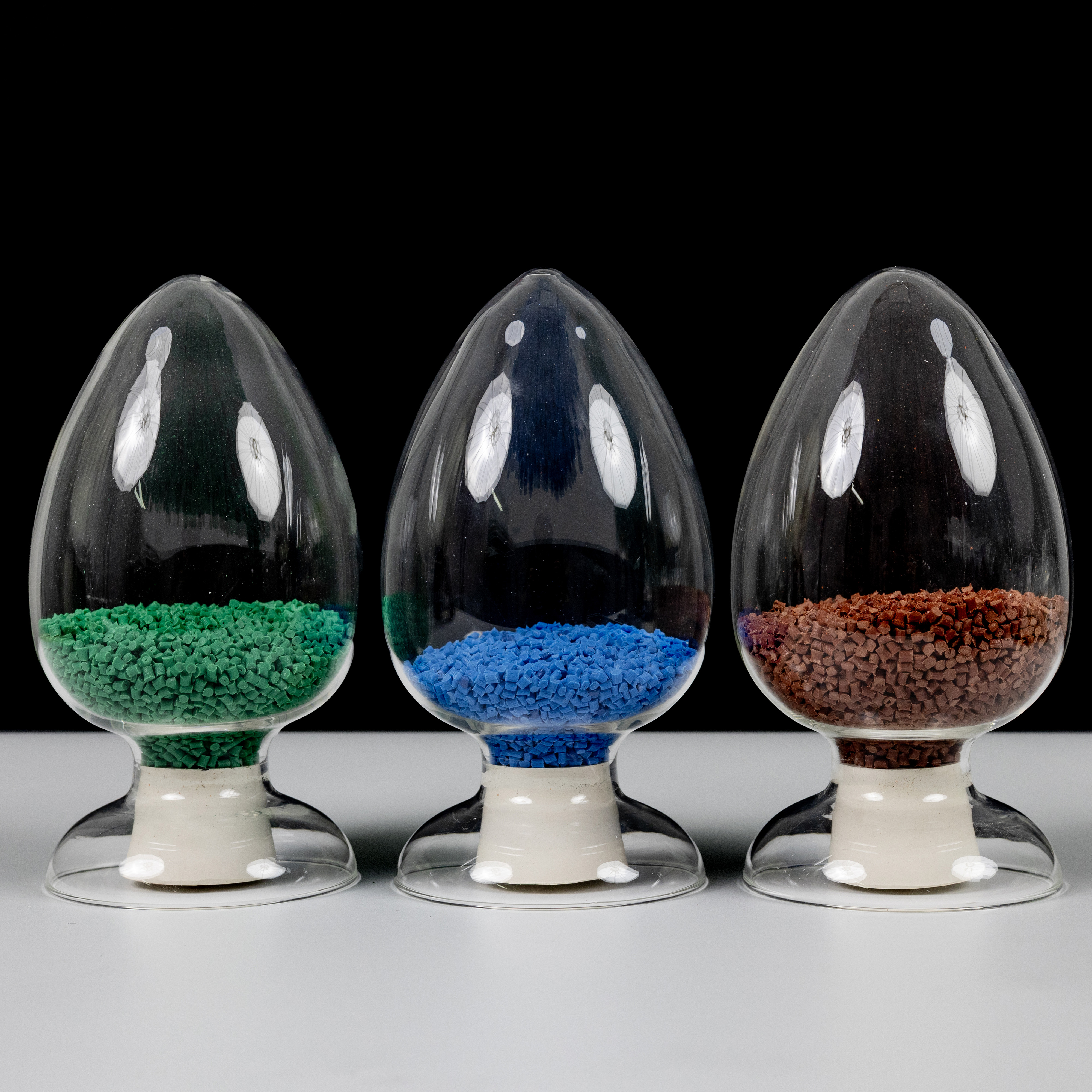
Against PA66-WHG30A, PBT-WHG30 publishes lower tensile strength (130 vs 175 MPa), lower notched impact (10 vs 18 kJ/m²) and a lower HDT (185 vs 220°C). It publishes a higher flexural modulus (8,200 vs 7,000 MPa) and a higher density (1.54 vs 1.38 g/cm³). Those numbers do not decide the application. They show where the buyer should test: structural load, impact at service temperature, heat margin and part mass.
PBT is often chosen for dimensional stability, electrical-component molding and lower moisture sensitivity, while PA66 is considered where toughness, mechanical strength and structural performance are central. That is the practical split for connectors and sensor housings. PBT may reduce moisture-related dimensional risk; PA66 may provide a stronger structural route for the required load.
The limitation is flame performance. The HB classification at 1.6 mm describes a specimen-level result at a stated thickness. It is not approval of an assembled connector, and it cannot be substituted for a V-0 requirement. If V-0 is mandatory, request a separately verified flame-retardant grade and confirm thickness, color and report scope.
2. PPS GF40: The High-Temperature Route
PPS GF40 moves to the top of the list only when continuous heat, chemical resistance and high-temperature dimensional stability are more demanding than PA66 GF30 can support. PPS is considered where those conditions justify it, and reinforcement and filler level are decisive.
PPS normally carries a higher material and tooling or process burden than PBT or PA66, and PPS processing requires high-temperature equipment and careful control. The comparison must therefore include continuous-use temperature, heat-deflection temperature, chemical exposure, creep, shrinkage, warpage, electrical requirements and matched test methods for the exact grades.
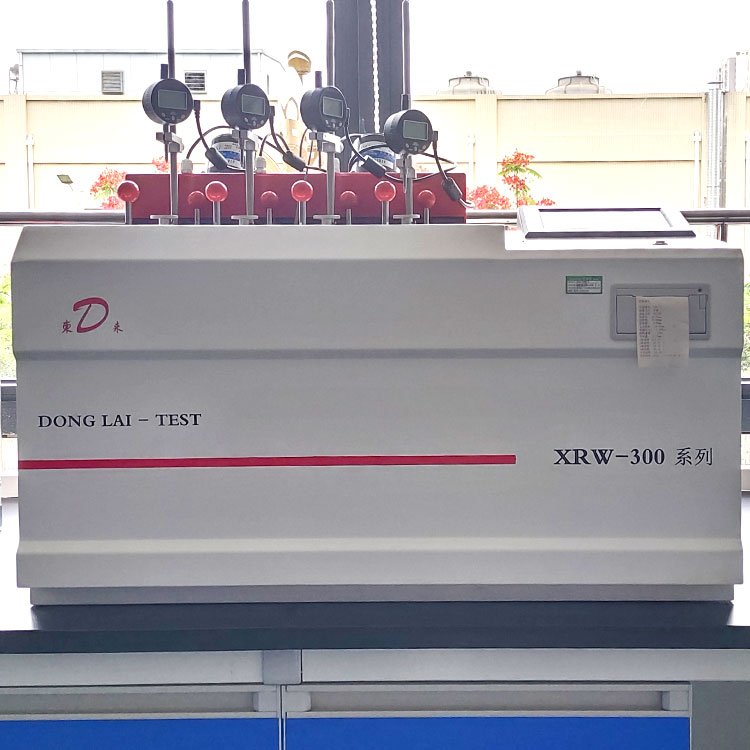
This review does not include a published WanHan PPS GF40 grade. A buyer should not transfer PA66 GF30 values, or another supplier's PPS values, to a PPS GF40 candidate. Request the exact-grade TDS, confirm the processing window on the intended machine, and validate mold materials, venting, shrinkage and finished-part exposure.
3. Flame-Retardant PA6 GF30: When the Flame Rating Drives the Decision
Flame-retardant PA6 GF30 is the candidate when a documented flame requirement and the PA6 processing window both fit the part. WanHan's PA6 GF30 grade is PA6-WHG30B. Any heat, impact, UV, flame-retardant or hydrolysis-stabilized adjustment is subject to the confirmed grade, so the flame rating must be verified for the exact grade and thickness rather than inferred from the PA6 GF30 designation.
PA6 GF30 offers a somewhat broader processing window than PA66 GF30, while PA66 GF30 is normally screened first where elevated-temperature stiffness and long-term structural retention are priorities. That trade-off explains the third position: flame-retardant PA6 GF30 is a strong option for flame-rated electrical and electronic parts, but it is not a drop-in structural replacement for PA66 GF30.
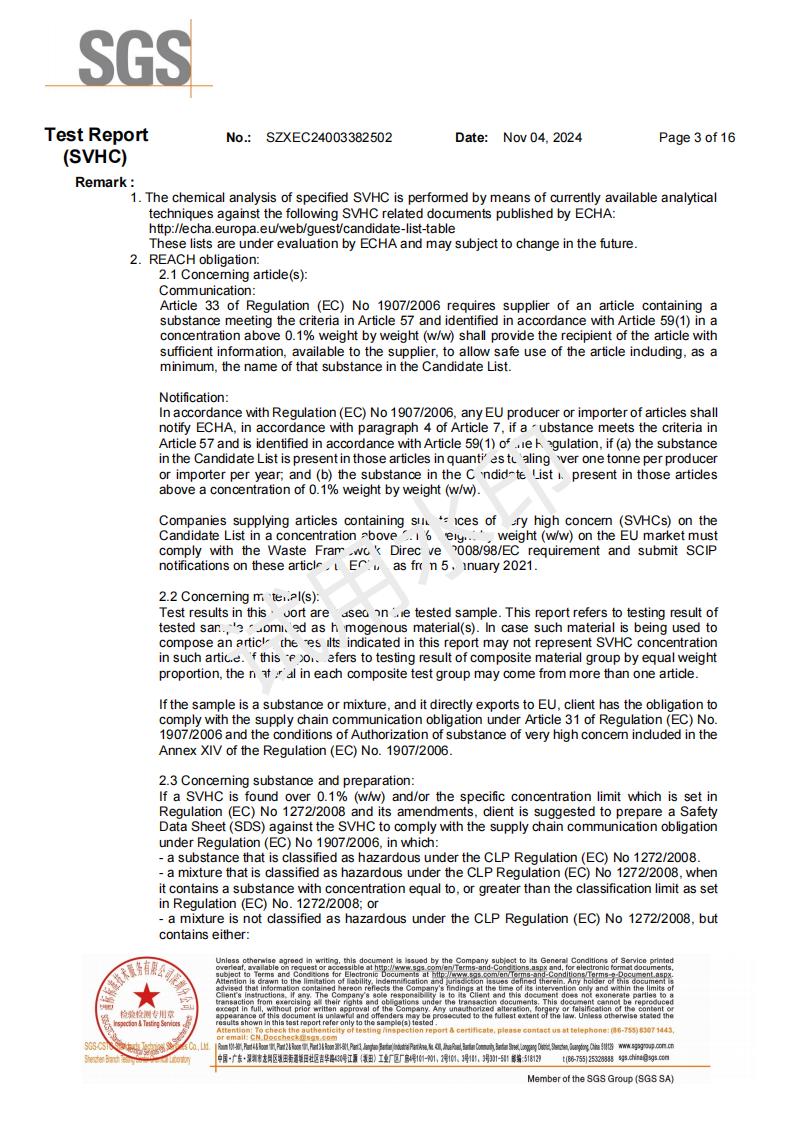
A V-0 requirement needs a separately documented flame-retardant grade. Verify the rating at the stated thickness, the color, the test method and the report scope. A common documentation error is to submit a report for a different sample or polymer family. The available SGS reports SZXEC24003382501 and SZXEC24003382502 identify the tested sample as flame-retardant PP and must not be presented as PA66 GF30 or PA6 GF30 RoHS, REACH, flame or electrical certification. Compliance evidence must match the tested sample name, polymer family and grade of the delivered resin.
For buyers who can accept a PA66 matrix, WanHan also lists PA66-WHRG30A, a flame-retardant PA66 GF30 grade whose TDS states UL 94 V-0. The specimen thickness is not stated, so the rating must be confirmed at the required thickness before approval.
4. PA66 CF30: Carbon-Fiber Reinforcement for Stiffness-Critical Parts
PA66 CF30 is the candidate when carbon-fiber reinforcement is justified by a stiffness, mass or dimensional requirement that glass fiber does not meet. It is a different reinforcement system, not a higher grade of GF30.
Carbon-fiber-reinforced PA66 changes shrinkage, warpage and moisture behavior. Comparisons with PA66 GF30 should use exact-grade data on shrinkage, warpage and moisture uptake, measured on the same specimen geometry and conditioning state. Published GF30 values must not be copied across.
This review does not include a published WanHan PA66 CF30 grade. WanHan's published carbon-fiber grade in the supplied range is PA11-WHC25, a PA11 compound with 25% carbon fiber; it is a different polymer and is not a PA66 CF30 substitute. Buyers evaluating PA66 CF30 should request the exact-grade TDS, confirm fiber content and orientation effects, and plan a production-tool trial that measures both flow and transverse dimensions.
5. PP GF30: The Cost and Weight Route
PP GF30 is the lowest-density route on this list and the right candidate only when the part's heat, stiffness, impact, chemical exposure and dimensional requirements can be met by a validated PP formulation.
PP offers low density and chemical resistance, and it often avoids hygroscopic drying, which can reduce material mass and preprocessing energy for a suitable part. Those advantages do not transfer automatically to a high-temperature or high-load part.
PP GF30 is considered a sensible alternative to PA66 GF30 when a validated PP formulation meets the application and conditioned molded parts plus total accepted-part cost are compared before substitution. PP-WHG30 is the 30% glass-fiber PP grade designation used in WanHan's range. The production model and its current TDS must be confirmed before approval. PA66-WHG30A has published exact-grade data; the PP-WHG30 designation still requires confirmation against a production TDS before it can be used as a substitute.
Evaluation criteria include the continuous service profile, mechanical load, moisture and chemical exposure, thermal limits, tool compatibility, part weight, required reports and exact-grade data.
Step-by-Step: How to Evaluate Each Candidate
Step 1 — Define the part and service conditions. Provide the part drawing and wall thickness, the molding or extrusion process, continuous and peak temperature, mechanical load and impact, humidity, fluids and chemicals, dimensional tolerance, appearance and color, flame, electrical and regulatory requirements, and sample and annual quantity. A material name alone is insufficient for a modified grade request.
Step 2 — Compare only matched data. Confirm the grade code, polymer, reinforcement, units, test standard, specimen condition, temperature and edition. Do not mix dry-as-molded and conditioned data, and do not copy values from another reinforcement level. A 220°C HDT is not a continuous-use rating, and an HB result at 1.6 mm is not a V-0 approval.
Step 3 — Check the compliance scope. Verify the report number, applicant, tested sample name, polymer family, grade, test method, edition and date. The document must match the supplied grade and the claimed requirement. An exact-grade report should be requested when the destination market or customer requires PA66 GF30 compliance evidence.
Step 4 — Run a controlled drying and molding trial. PA, PBT, PET, PC and PC/ABS can be sensitive to moisture, but the required drying temperature and time vary by grade. Do not apply one generic drying setting to every resin. Record the dryer, dew point where applicable, time, molding settings and sample condition, and keep dried material in a controlled closed feed path.
Step 5 — Measure the part, not just the specimen. Check flow and transverse shrinkage, warpage, weld lines, insert retention and dimensions after the agreed conditioning cycle. Warpage is a material, part and process interaction; fiber orientation, gate location, wall-thickness change, flow length, mold temperature, holding pressure and uneven cooling can dominate the result.
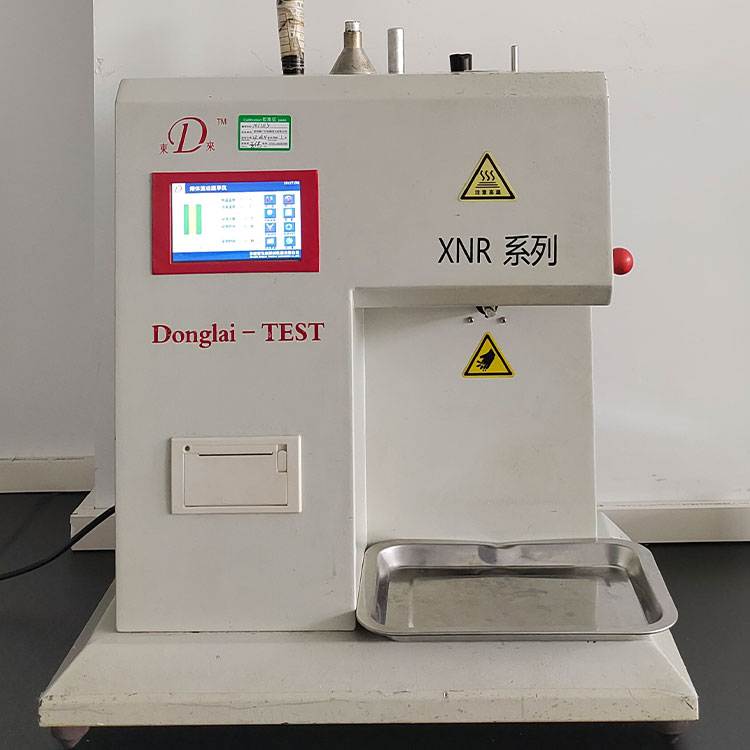
Step 6 — Agree the acceptance baseline. Retain reference material and parts, confirm batch traceability and change-control expectations, and approve the grade on production-tool results rather than on a single laboratory value.
Use Cases: Matching the Candidate to the Part
- Automotive wiper-system parts, sensor housings and connectors: start with PBT-WHG30. Its published ISO data and HB classification at 1.6 mm make it the most directly verifiable candidate for these parts, subject to electrical, thermal and dimensional validation.
- Under-hood brackets, covers, cooling fans and fluid-handling housings: keep PA66-WHG30A as the baseline for PA66 GF30 for automotive parts. Move to PPS GF40 only where continuous heat, chemical exposure or high-temperature dimensional stability justifies the higher processing burden.
- Electrical connectors, coil bobbins and other flame-rated parts: evaluate flame-retardant PA6 GF30 or a verified flame-retardant PA66 grade. Confirm V-0 at the required thickness and match the report to the exact grade. This is the practical route for PA66 GF30 for electrical connectors when flame performance is mandatory.
- Stiffness-critical structural parts: evaluate PA66 CF30 only with exact-grade shrinkage, warpage and moisture data. Do not infer carbon-fiber behavior from glass-fiber data.
- Cost- and weight-sensitive housings with moderate thermal load: evaluate PP GF30 after TDS confirmation and a conditioned-part comparison that includes total accepted-part cost.
Comparison Table
| Property (method) | PA66-WHG30A baseline | PBT-WHG30 | PPS GF40 | FR PA6 GF30 | PA66 CF30 | PP GF30 |
|---|---|---|---|---|---|---|
| Tensile strength | 175 MPa (ISO 527-2) | 130 MPa (ISO 527) | Not stated in this review | Not stated in this review | Not stated in this review | Not stated in this review |
| Tensile strain at break | 9% (ISO 527-2) | 5% (ISO 527) | Not stated in this review | Not stated in this review | Not stated in this review | Not stated in this review |
| Flexural strength | 255 MPa (ISO 178) | 210 MPa (ISO 178) | Not stated in this review | Not stated in this review | Not stated in this review | Not stated in this review |
| Flexural modulus | 7,000 MPa (ISO 178) | 8,200 MPa (ISO 178) | Not stated in this review | Not stated in this review | Not stated in this review | Not stated in this review |
| Notched impact | 18 kJ/m² (ISO 179) | 10 kJ/m² (ISO 180) | Not stated in this review | Not stated in this review | Not stated in this review | Not stated in this review |
| Heat deflection temperature | 220°C (ISO 75-2/B) | 185°C (ISO 75) | Not stated in this review | Not stated in this review | Not stated in this review | Not stated in this review |
| Density | 1.38 g/cm³ (ISO 1183) | 1.54 g/cm³ (ISO 895 as published) | Not stated in this review | Not stated in this review | Not stated in this review | Not stated in this review |
| Melt flow index | 20 g/10 min (ISO 1133) | 24 g/10 min (ISO 1133) | Not stated in this review | Not stated in this review | Not stated in this review | Not stated in this review |
| Mold shrinkage | 0.5% (ISO 2577) | 0.5% (ISO 2577) | Not stated in this review | Not stated in this review | Not stated in this review | Not stated in this review |
| UL 94 | Not specified | HB at 1.6 mm | Not stated in this review | Must be confirmed for exact grade | Not stated in this review | Not stated in this review |
| Dominant trade-off | Heat and structural retention | Dimensional stability and electrical molding | High-temperature capability | Flame performance | Stiffness | Density and cost |
FAQ
Does PA66-WHG30A have a UL 94 rating?
No UL 94 rating is stated in the published PA66-WHG30A grade data. The 220°C figure is an HDT under ISO 75-2/B, not a continuous-use temperature, and it does not imply flame performance. If the part needs a flame rating, request a separately documented flame-retardant grade and verify the rating at the required thickness, color and report scope. The available SGS reports SZXEC24003382501 and SZXEC24003382502 cover flame-retardant PP only and must not be used as PA66 GF30 evidence.
Can PBT-WHG30 replace PA66-WHG30A in a connector housing?
It can be shortlisted, not assumed. PBT-WHG30 publishes UL 94 HB at 1.6 mm, tensile strength 130 MPa, flexural modulus 8,200 MPa and HDT 185°C. PA66-WHG30A publishes 175 MPa, 7,000 MPa and 220°C, with no stated UL 94 rating. Selection depends on the required flame rating and thickness, dielectric and thermal tests, moisture exposure, dimensional tolerance, insert retention, tooling and conditioned-part performance. If V-0 is mandatory, neither grade is approved without separate exact-grade evidence.
Is a lower resin price the right way to compare GF30 compounds?
No. Cost comparison between PA6 GF30 and PA66 GF30, and between PA66 GF30 and PBT or PP alternatives, requires drying demand, cycle stability, scrap risk, mold correction risk and service-life requirements, not resin price alone. Compare total part cost, conditioning, assembly and qualification cost, and the cost of a failed validation.
What sample quantity is available for evaluation?
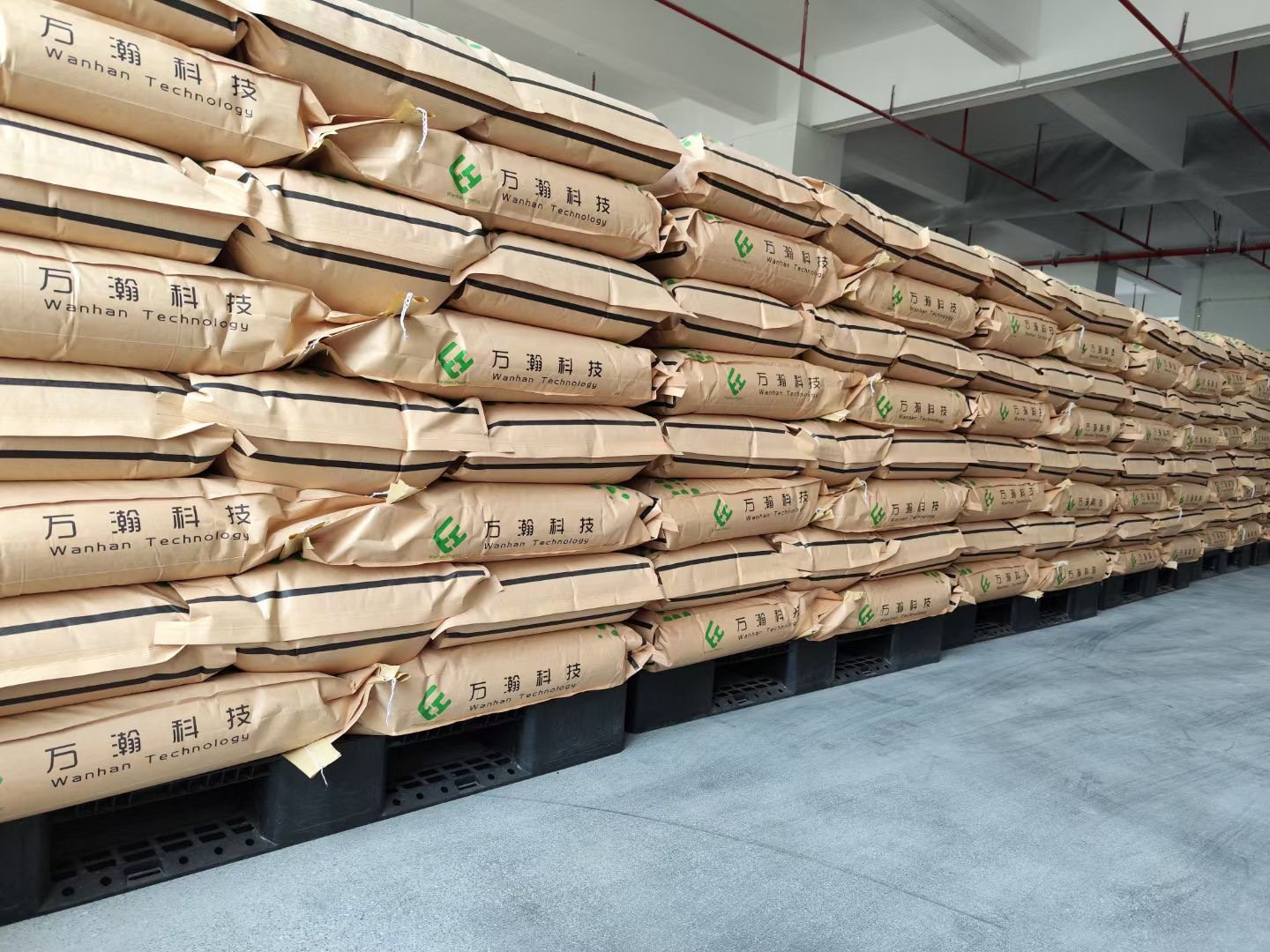
The MOQ for WanHan PA66 GF30 is 5 kg, subject to grade and commercial confirmation. Material is supplied in 25 kg bags with palletized shipment available, in natural, black or custom color subject to confirmation. A sample should be used for a controlled drying and molding trial, not as the sole basis for production approval.
How long does a custom grade take, and what should buyers send first?
WanHan states a custom-grade lead time of 7–10 days, subject to formulation, testing, material availability and order confirmation, with PA66 GF30 monthly capacity of up to 5,000 metric tons subject to production schedule. Buyers should first send the part drawing, wall thickness, process, continuous and peak temperature, load and impact, humidity, fluids and chemicals, tolerance, appearance and color, flame, electrical and regulatory requirements, and sample and annual quantity. WanHan then screens the material family and grade, identifies missing evidence, supplies the exact TDS and sample plan, and recommends a controlled mold or process trial.
Conclusion: Shortlist by Evidence, Approve by Part
PA66 GF30 remains a strong baseline for elevated-temperature stiffness, dimensional stability and long-term structural retention. The purpose of this shortlist is not to replace it by default. It is to identify where another reinforced compound can meet the same part specification with better evidence, lower total cost or a more suitable property balance.
PBT-WHG30 ranks first because it combines published ISO data with a stated UL 94 HB classification at 1.6 mm and a clear fit with automotive wiper-system parts, sensor housings and connectors. PPS GF40 ranks second for genuinely high-temperature needs. Flame-retardant PA6 GF30, PA66 CF30 and PP GF30 follow as application-specific routes that require confirmed grade data.
The decision rule is consistent across all five candidates: compare matched data, verify the compliance scope, run a production-tool trial, and approve the molded part rather than the data sheet. WanHan operates under ISO 9001:2015, ISO 14001:2015 and ISO 45001:2018 management systems; these are company management-system certificates, not product-compliance evidence for a specific grade.
Next step: sample or quote
Send the part drawing, service conditions and required reports to WanHan Plastic. The company states a PA66 GF30 MOQ of 5 kg, a custom-grade lead time of 7–10 days and a monthly PA66 GF30 capacity of up to 5,000 metric tons, subject to grade, testing, material availability and production schedule.
Contact: gdwanhan@163.com | +86 135-3701-2277 | WhatsApp: +86 135-3701-2277
View the PA66-WHG30A grade page | Download the WanHan company and product introduction PDF
Have Questions or Need More Details?
Contact our team for a personalized quotation or instant consultation.
Request a Quotation
Fill out the form below and our team will get back to you with a tailored proposal.
WhatsApp Direct Chat
Prefer to chat in real-time? Message us on WhatsApp for instant assistance & quick answers.
- Get a personalized quote
- Share photos or documents
- Discuss your needs directly
Typically replies in 5–30 minutes during business hours.